ECTS Philippe Bordier Award
Nominations period: nominations are now open!
Doctor Philippe Bordier (1927-1977) contributed significantly to the bone field by developing bone histomorphometry, which he applied to the analysis of several bone diseases. His work and dynamism in science has been recognised in Europe and United States.
The award is for €1000 (Euros) and is announced during the ECTS annual congress.
Eligibility
The ECTS Philippe Bordier Clinical Award is open to individuals who have made a significant clinical contribution to the field of bone and calcified tissue, including diagnostic aspects.
ECTS Board members are not eligible to this award during term of office in the ECTS Board.
To be eligible you must be a current member of ECTS.
The scientific profile of the candidate is the most important parameter that is evaluated.
In addition, number of years spent as member of ECTS and positions held inside the Society can also be considered.
Winners must wait five years before applying for another named award.
Submission Procedure
Nominations are now open!
Nominees must be nominated and seconded by ECTS members, via the online form.
Review Procedure
All nominations are reviewed by an independent panel of reviewers. The final decision is based on the marks and comments from the reviewers and any conflicts of interest are identified and dealt with appropriately.
Winner of the 2026 Philippe Bordier Award
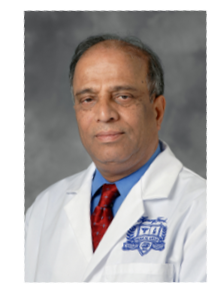
Congratulations to Professor Sudhaker Dhanwada Rao, Henry Ford Medical Center, New Center One, Detroit, USA, recipient of the 2026 Philippe Bordier Award presented during the ECTS 2026 Congress in Girona.
For a full list of previous Award recipients, please visit the Previous Grants section.
Dr. Rao’s career in Bone & Mineral Metabolism started soon after graduation from medical school in 1969. He established thefirst bioassay for 25-hydroxyvitamin D in 1970 before the current assay methods became available. After his fellowship inEndocrinology, and Research Fellowship in Bone & Mineral Disorders at Henry Ford Hospital, Detroit, he joined as senior staffin July 1977 where he continues to work doing clinical, translational and basic science research. His major contributions to thefield include:
Described the critical role of bone microarchitecture architecture to fracture risk using human bone biopsy sample frompatients with and without vertebral fractures
Role of osteocyte in bone fragility
Described in detail on bone biopsy procedure using both Bordier and RNOH Trephine and developing criteria for the diagnosisof osteomalacia
Conducted both natural history of untreated mild asymptomatic primary hyperparathyroidism (PHPT) study and the firstrandomized clinical trial of surgery versus no surgery for asymptomatic PHPT
First to describe atypical femur fracture as a complication of long-term BP therapy and conducted nested case-control studyon the pathogenesis of AFF
One of first to describe loss of VDR and CaSR loss in parathyroid adenomas and several papers on the molecularmechanisms of parathyroid tumorigenesis
He is been doing collaborative research in the filed with my colleagues around the world especially India and Italy on PHPTphenotypes, adenoma behavior, and clinical manifestations.
He is actively involved in research projects with members of ECTS publishing many papers on high impact journals.
He was involved in the first 3 guideline committees on the management of mild asymptomatic PHPT
He was a member of the vitamin D Guideline Update of the Endocrine Society published in 2024
His work continues as the Director of Bone & Mineral Research Laboratory, originally started by late Harold Frost, renownedfor its legendary and more than half a century of research history.