Plastic interactions between normal and malignant haematopoietic cells and the bone marrow microenvironment
Live Webinar: 6 April 2016
Webinar objectives:
- Learn about the cutting-edge science and career paths of the most successful young scientists in Europe
- Ask questions to better develop your own career plan
- Learn from the questions of peers
- Benefit from the knowledge of speakers on how to apply for ERC grants
Format:
- 25 min science presentation
- 10 min presentation of the career path
- 25 min Q&A
About the speaker:
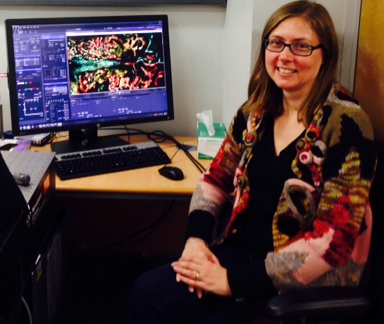
Dr. Cristina Lo Celso studied Biotechnology in Medicine at the University of Turin, Italy and then moved to London, UK to do her PhD at the University College London/Cancer Research UK studying the role of β-catenin signalling in adult epidermal cell fate specification. After completing her PhD thesis, Cristina joined the group of Prof. David Scadden at Harvard Medical School. Within her work as a post-doctoral fellow and instructor, she established ground-breaking tools to visualize hematopoietic stem cells and study their function in the bone microenvironment in live animals. In 2009, she was recruited to the Imperial College London and founded her own research laboratory. Her major interest is focused on somatic stem cell biology and their role in tissue turnover in health and disease (see abstract), and she continues using haematopoietic stem cells as her model of choice. In 2013, she has been awarded one of the few prestigious ERC Starting Grants, which complemented other grants from CRUK, BBSRC, HFSP, Bloodwise and KKLF. Cristina was elected member of the London Medical Research Club in 2015, is part of the editorial board of Scientific reports and Intravital, and this year she is co-organizing an EMBL conference on haematopoiesis throughout development to be held in June 2016 in Heidelberg.
Abstract:
Hematopoietic stem cells (HSCs) maintain the turnover of mature blood cells during steady-state and in response to systemic perturbations such as infections. Their function critically depends on complex signal exchanges with the bone marrow microenvironment in which they reside, but the cellular mechanisms involved in HSC-niche interactions and regulating HSC function in vivo remain elusive. Our current hypothesis is that external stress events, such as infections or leukaemia development, impact HSC fate by altering HSC-niche interactions.
We studied a natural mouse parasite, Trichinella spiralis, and used multi-point intravital time-lapse confocal microscopy of mouse calvarium bone marrow to test whether HSC-niche interactions may change when haematopoiesis is perturbed. We find that steady-state HSCs stably engage confined niches in the bone marrow whereas HSCs harvested during acute infection are motile and therefore interact with larger niches. These findings suggest that HSC-niche interactions may be modulated during infection.
Moreover, we have developed longitudinal tracking of leukaemia cells to enable us to obtain new insights on the cellular mechanisms of leukaemia growth and uncover whether leukaemia initiating cells as well as relapsing cells have specific niche requirements, and if so, whether they compete with normal haematopoietic stem cells for niche space or select or even carve their own niches.
Top 5 publications:
- Khorshed R, Duarte D, Spitaler M, Scott M, Akinduro O, Rashidi N, Lo Celso C (2015): Automated multi-resolution segmentation allows recognition and multi-parametric quantification of haematopoietic stem cells in their natural bone marrow microenvironment. Stem Cell Reports 5:139-53.
- Rashidi N, Scott M, Scherf N, Kalchschmidt J, Roeder I, Selkirk M, Gounaris K, Lo Celso C (2014): In vivo time-lapse imaging shows diverse niche engagement by quiescent and naturally activated haematopoietic stem cells. Blood 124(1):79-83.
- Lo Celso C, Lin CP, Scadden DT. (2011): In vivo imaging of transplanted hematopoietic stem and progenitor cells in mouse calvarium bone marrow. Nature Protocols 6(1):1-14.
- Adams GB, Alley IR, Chung UI, Chabner KT, Jeanson NT, Lo Celso C, Marsters ES, Chen M, Weinstein LS, Lin CP, Kronenberg HM, Scadden DT (2009): Haematopoietic stem cells depend on Galpha(s)-mediated signalling to engraft bone marrow. Nature 459 (7243): 103-107.
- Lo Celso C, Fleming HE, Wu JW, Zhao CX, Miake-Lye S, Fujisaki J, Côté D, Rowe DW, Lin CP and Scadden DT (2009): Live-animal tracking of individual hematopoietic stem cells in their niche. Nature 457(7225):92-96.